Buy 3 Garments get 15% off


The Story of Our Silk 🌿✨Hi my sweetest customers, I can’t thank you enough for the love and energy you’ve poured into RIMMBA. Truly, it’s what keeps me going. I’ve wanted to write this blog post about silk for so long, but I kept hesitating… maybe it’s too much detail, too technical. Yet the story of silk is too extraordinary not to tell. If you don’t know me yet: I’m Karunia, founder and designer of RIMMBA. Silk is at the very heart of our work. It’s one of the rarest fibers in the world — only 0.2% of global textiles — yet it has carried culture, beauty, and livelihood for over 5,000 years. Global Textile Fiber Market Share Polyester 49.5% · Cotton 28.5% · Nylon 4.8% · Acrylic 1.9% · Other synthetics 1.9% · Wool 2.9% · Linen 1.9% · Other natural fibers 8.5% · Silk 0.2% At RIMMBA, we use only real silk: 100% natural fiber, never blended, never diluted. No plastic imitations, no “silky touch” labels — just authentic, luminous silk. |

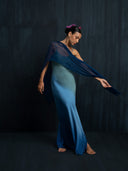
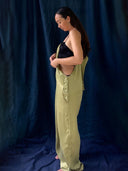
Our collection is crafted from pure mulberry silk satin and dyed gently with plants, honouring the slow artisanal methods we stand for. Photographed in Desa Tenganan, East Bali — one of the last remaining Bali Aga villages and home to Bali’s original Indigenous community — this piece is dyed using real marigold flowers. |

Bombyx Mori silkworms — native to China — feed exclusively on mulberry leaves. Around 90% of the world’s silk comes from this species, which is why the fibre is known as mulberry silk. The process of producing silk is called sericulture, and silk accounts for less than 0.2% of the global textile fibre market — making it one of the rarest natural fibres in the world. |

Moments from our Natural Dye Workshop — a deep dive into silk, natural dyes, and sustainable fashion.Held every second month, with private sessions available by booking. ORIGINAL PHOTO BY RIMMBA |
What is Silk?Silk is a natural filament produced by the silkworm. Each silkworm species eats a different leaf — mulberry, castor, oak, forest — producing distinct textures and qualities. The unique feature of silk is that it is the longest continuous natural filament in the world. A single cocoon can produce up to 2,000 meters of unbroken thread, which gives silk its unmatched softness, tensile strength, and sheen. Unlike cotton or linen, silk has a far narrower origin. It thrives only in Asia — in China, India, Thailand, Vietnam, and Indonesia — where mulberry trees and warm, humid climates sustain sericulture. A Legend Born in ChinaAround 2700 BCE, Empress Leizu was sipping tea under a mulberry tree when a cocoon fell into her cup. This secret remained in China for almost 4,000 years, until the Silk Road carried it across Asia and Europe, along with shimmering cloth, ideas, and culture. |

“Court Ladies Preparing Newly Woven Silk” (Dao Lian Tu, 捣练图) is a renowned Tang-dynasty painting attributed to the artist Zhang Xuan (张萱). The scene depicts noblewomen engaged in various stages of finishing silk — stretching, ironing, sewing, and pounding the cloth. As one of the most iconic “lady paintings” of the Tang era, it not only showcases the refinement of court life but also provides valuable insight into historical sericulture practices. This work deeply influenced later artistic styles and remains an important reference for studying early Hanfu clothing and textile traditions. |
Mulberry SilkThe Heart of RIMMBAAt RIMMBA, 80% of our garments are pure silk, mainly mulberry silk charmeuse — our softest and most luminous fabric. The other 20% use natural fibers like cotton, linen, and ramie. At RIMMBA, 80% of our garments are pure silk, mainly mulberry silk charmeuse — our softest and most luminous fabric. The other 20% use natural fibers like cotton, linen, and ramie. Mulberry silk comes only from silkworms fed on mulberry leaves, producing the largest cocoons and the longest, strongest filaments. The Bombyx mori silkworm is now globally renowned for its softness and sheen. What many people don’t realise is that Bombyx mori exists in different regional strains: in China, centuries of selective breeding created a white-cocoon variety ideal for even dyeing, while in Cambodia, Thailand, and Laos, artisans preserved the older yellow-cocoon strains. These Southeast Asian silkworms naturally absorb plant pigments from mulberry leaves, spinning threads that range from soft yellow to deep gold. Both are true mulberry silk — the difference lies in the genetics each region chose to keep alive. We source our mulberry silk charmeuse from regenerative farms in China, grown without chemicals. As a Bali-based brand, we also source locally when logistics require. Our long-term goal is to scale so we can rely exclusively on organic, traceable mulberry silk. Curious about other varieties? Read about RIMMBA's natural fabrics to see how mulberry silk compares with alternatives. |

Silk reeling is the process of unwinding raw silk filaments from silkworm cocoons and combining them into a single continuous thread ready for weaving. In traditional mulberry sericulture, the cocoons are softened in hot water to loosen the filaments before reeling. In contrast, certain wild or Ahimsa silks are reeled only after the moth has emerged, resulting in shorter, naturally broken fibres. Despite these differences, reeling remains one of the most important stages in silk-making — the quality of this step directly shapes the texture, strength, and beauty of the final fabric. Photo by Panda Silk |
 Bombyx mori cocoons arranged in a traditional circular bamboo tray. Farmers place the nearly mature silkworms in these spiral-shaped compartments so each worm has its own space to spin a clean, intact cocoon. The circular pattern keeps them separated, prevents tangling, and allows the farmer to monitor the entire batch easily. From the time the eggs hatch to the moment the cocoons are ready, the full rearing cycle takes about 6–8 weeks. The worms are fed mulberry leaves several times a day, growing rapidly through five instars before climbing onto these trays to begin spinning. |
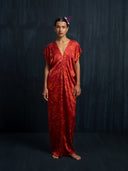
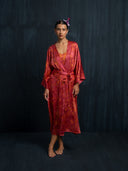
 Nindy wears our Red Eco-Print Wabi-Sabi Kimono — a botanical artwork on mulberry silk. The silk is wrapped into a tight bundle spiral, layered with seasonal plants like brazilwood, marigold petals, onion skins, and hibiscus. It’s then steamed on low heat, allowing the plants to release their pigments and leave their shapes and colors on the fiber. |
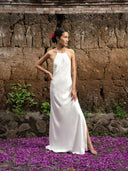
 Shot in Desa Tenganan, one of Bali’s oldest Bali Aga villages. Our Aphrodite and Parvati silk dresses in white, surrounded by dancing flowers honouring the botanicals behind our dyes. The models stand before Tenganan’s iconic mud wall — one of the walls that remained standing during the earthquake. |
Beyond MulberryOther Silks We UseAlongside mulberry, I often collect wild silks during travels — sometimes just 50–100 meters. Each fiber carries its own story, shaped by silkworm species and the traditions of local weavers.
|

100% Tussar Silk — Wild Silk from India. Part of our exclusive collection, Tussar is harvested from free-roaming silkworms that feed on forest trees such as Asan, Arjun, and Sal. This wild diet gives the fibre its signature golden hue, a slightly textured handfeel, and a strength that reflects the resilience of the landscape it comes from. Unlike cultivated silk, Tussar production relies on women in rural communities who gather cocoons from the forest floor, preserving an ancient craft that supports local livelihoods. Each piece carries the raw beauty of wild silk — organic, earthy, and deeply connected to nature. |

Orange fibre silk from Italy: an innovative textile made from citrus waste, transformed into a silky, plant-based yarn. Photo by Orange Fiber |
Orange SilkVegan Silk InnovationWe also feature Orange Silk by Orange Fiberin Italy — a patented, biodegradable textile made from discarded orange peels. Luxurious and vegan, it is costly and produced in very limited quantities. The fabric is also woven in a narrower width, which makes it unsuitable for our full-length bias-cut maxi dresses, and shipping to Indonesia is often unpredictable and expensive. Because of these limitations, we only create Orange Silk pieces when we’re able to source the fabric during our travels abroad and personally bring it back to Bali. |
How is Silk Made?The lifecycle of the mulberry silkworm shows why silk is so extraordinary:
|

The Bombyx mori silkworm moves through four stages — egg, larva, cocoon, and adult moth. The eggs hatch in about 10–14 days, and the larvae feed on mulberry leaves for 4–5 weeks before climbing onto bamboo trays to spin their cocoons over 3–4 days. Inside the cocoon they pupate for another 10–14 days. When the adult moth emerges, it lives only 5–10 days and naturally does not eat or drink; its sole purpose is to mate and lay eggs before the cycle begins again. |
Silk as an EcosystemSilk is more than a fabric — it’s an ecosystem. Mulberry trees, silkworms, families, and cooperatives form a chain that sustains entire communities in China, India, Vietnam, and Indonesia. Mulberry trees themselves provide food, medicine, fodder, and fuel — nothing is wasted. Mulberry trees support a circular ecosystem far beyond silk. In traditional sericulture, every part of the tree and silkworm is used: the leaves feed Bombyx mori, while the stalks and bark are transformed into mulberry paper — a strong, beautifully textured fiber once used for manuscripts, art, and ritual offerings across Asia. The berries become jams and herbal tonics, the branches fuel natural dyes, and even the silkworm pupae are fried and eaten in many cultures as a high-protein, nutrient-dense food. Sericulture was always designed to be zero-waste — a living example of how nature provides abundance when every part is respected. |

The Bombyx mori silk moth, freshly emerged from its cocoon. Silk moth species vary widely, and each produces a different type of silk. Bombyx mori silkworms are monophagous — in nature they feed only on mulberry leaves. Even artificial diets rely on mulberry derivatives; these worms cannot switch to other plants.The silk they produce is therefore called mulberry silk — the very silk we use. |

Mulberry trees do far more than feed silkworms — their berries are a nutritious fruit enjoyed fresh, dried, or made into jams. In sericulture, these trees are valued not only for their leaves but for the abundance they offer year-round. |
Silk Under ScrutinySilk is often discussed only through the lens of ethics — usually by people far removed from the places where sericulture actually takes place. The criticism focuses on one moment: the harvesting of cocoons. But this single step doesn’t reflect the full reality of how silk is made or what it means for the communities who depend on it. Across much of Asia, sericulture is a livelihood system. Families grow mulberry, raise silkworms, reel thread, and weave cloth not as a luxury craft, but as a practical source of income. The work is seasonal, home-based, and passed through generations — especially important for women who cannot leave their villages for factory jobs. There is no single version of silk. Mulberry, wild silk, Eri, tussar, and peace-silk all exist because different communities have different relationships to land, insects, and survival. Understanding silk requires recognising these realities, not reducing the entire craft to one moral viewpoint. |

Mulberry paper being made by hand — one of the many crafts sustained by the mulberry tree. Across China and Southeast Asia, this paper has been used for calligraphy, painting, temple offerings, and everyday record-keeping. In sericulture villages, it forms part of the same circular system: the bark and branches that once fed the worms or shaded the fields become a material for artisans, ensuring every part of the mulberry has purpose. Photo by Helen hiebert |
In CelebrationSilk is complex, fragile, and worth preserving. It is one of the few fibres that supports an entire chain of rural livelihoods, each dependent on the next. When you choose silk made with care, you help keep this ecosystem standing — the farmers, the artisans, the knowledge, and the micro-industries that have grown around it for generations. That is why we celebrate it. And that is why it matters. |